
Alloy Steel Machined Parts for Thermal Management and Precision Assembly
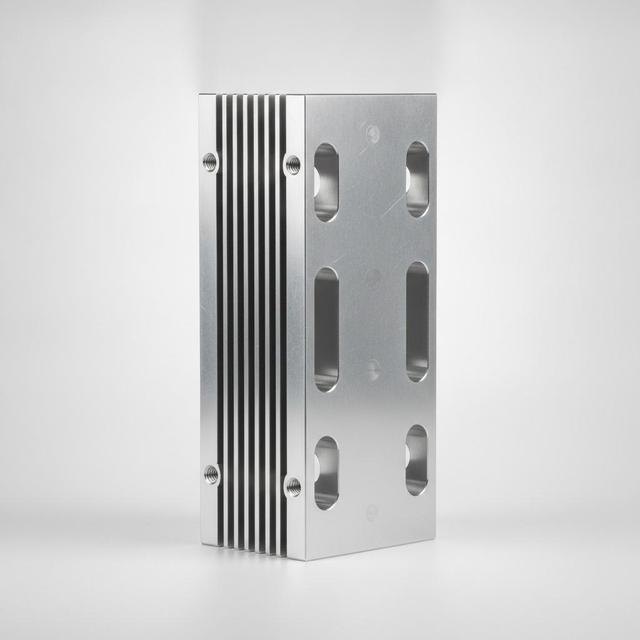
Alloy Steel Machined Parts are often chosen when a buyer needs a rigid, accurately machined component that can hold shape under load and support reliable assembly. In thermal-management hardware, the same need appears in a different form: the part must combine precise mounting features with a geometry that helps move heat away from sensitive electronics. The visible part in this case is a CNC-machined metal heat sink with a finned structure, flat mating faces, and drilled mounting points, making it suitable for compact power or control equipment where space, fastening accuracy, and heat dissipation all matter.
Product Overview
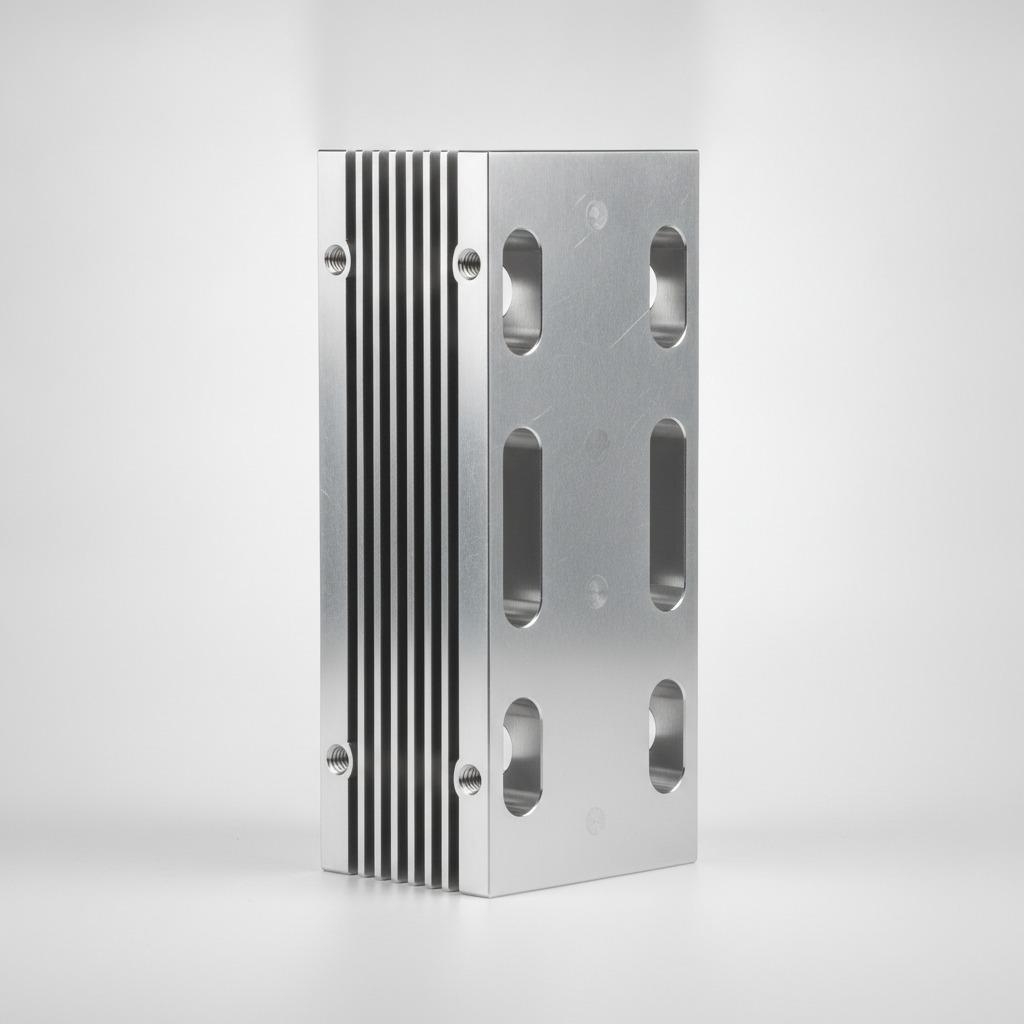
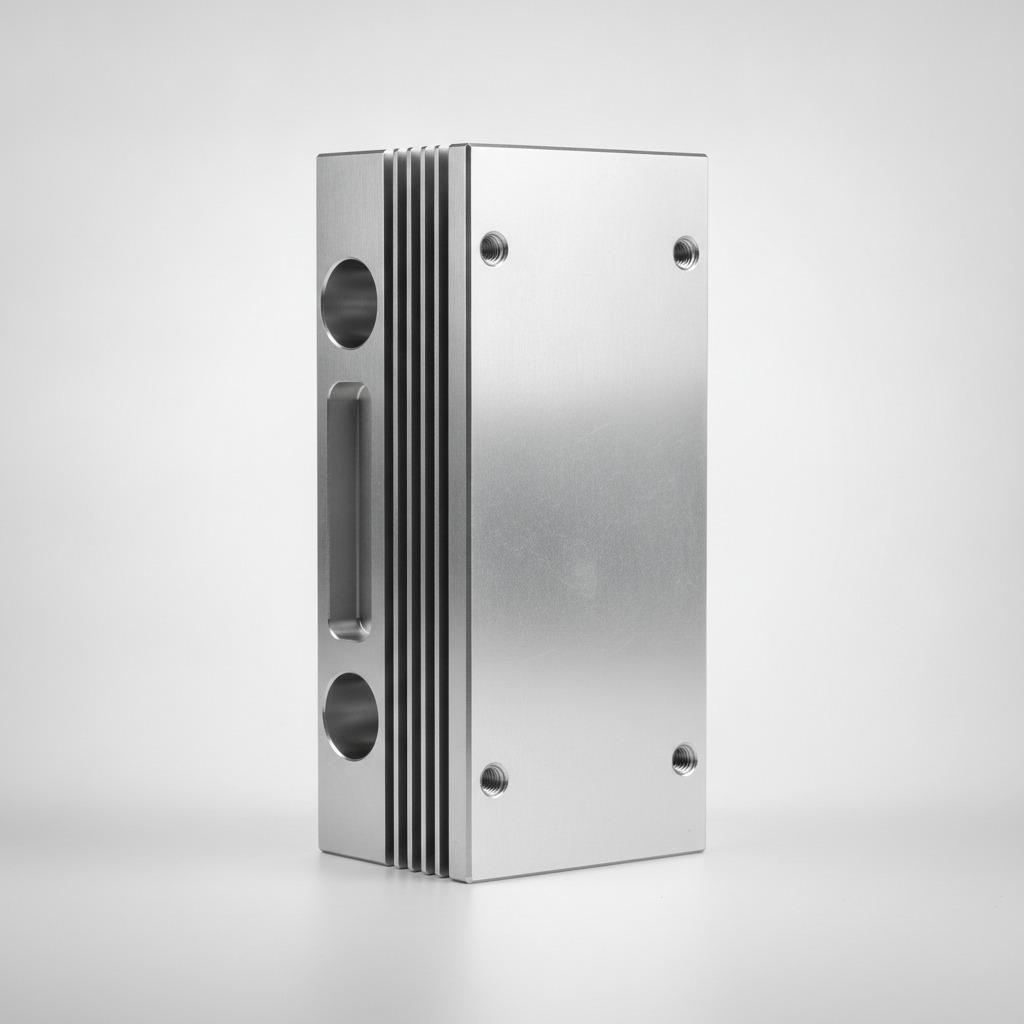
This component appears to be a rectangular machined heat sink made from aluminum or an aluminum alloy, with a light silver metallic finish and clearly visible machining marks. The body is compact and block-like, while the fin section increases the exposed surface area to support cooling by convection and, in some systems, forced air. The design also includes mounting holes and side cutouts that can help with installation, alignment, or clearance in a larger assembly.
Although buyers searching for Alloy Steel Machined Parts may be comparing different material options, the real selection point is usually the required balance of strength, machinability, thermal behavior, and installation needs. This part illustrates how precision machining can create a functional component that serves both mechanical and thermal purposes.
Key Specifications and Visible Capabilities
Geometry and structure
The part has a rectangular body with a finned edge, flat surfaces for contact or mounting, and evenly spaced channels between fins. These channels are important because they let air pass through or around the part, improving heat removal from the surface.
Mounting features
Multiple visible holes on the top and side faces suggest a design intended for secure fastening. The exact thread size and hole depth are not confirmed from the image, so these details should be reviewed against the engineering drawing before ordering.
Machining quality
Sharp edges, consistent fin spacing, and a regular block profile indicate CNC machining. That kind of process is useful when the assembly needs repeatable dimensions and a stable interface surface.
Materials and Finish Options
The visible finish suggests aluminum or an aluminum alloy rather than steel, because of the light color and common use of aluminum in heat sinks. The exact alloy is not stated, so it should not be assumed. If your application requires a steel-based machined part instead, the design logic is similar, but the thermal and weight characteristics will differ.
Visible finish appears to be a machined matte or brushed metal surface, with no obvious paint or coating. In custom production, buyers often request anodizing, deburring, passivation, or other secondary treatments depending on corrosion resistance, appearance, or electrical isolation requirements. Those treatments are not confirmed here.
Manufacturing Process
The image strongly suggests CNC milling or related machining from a solid blank or a prepared extruded base. Secondary operations likely include drilling, tapping, pocketing, and edge cleanup. This type of process is well suited to low-volume and custom production because it allows tight control over the fin shape, hole placement, and mating surfaces.
For projects involving Alloy Steel Machined Parts, the same workflow is often used to produce brackets, housings, clamps, tooling blocks, and structural components. The deciding factor is not only the material, but also the geometry and the accuracy required at assembly.
Application Scenarios
This part is appropriate for thermal management in power supplies, inverter systems, motor drives, LED lighting modules, industrial instrumentation, control boxes, RF electronics, and custom equipment enclosures. It can also be used wherever a compact metal body needs to transfer heat efficiently while remaining easy to mount.
In practical use, the finned section should be positioned to allow adequate airflow. If the enclosure is sealed or airflow is limited, the design may need adaptation, such as larger fin spacing, a different orientation, or forced-air assistance.
Quality Control and Buyer Decision Factors
When evaluating this type of machined part, buyers typically check flatness of the mating face, hole location accuracy, fin consistency, burr control, and overall dimensional repeatability. For thermal hardware, surface condition matters as well, because contact quality affects heat transfer. Jiangsu Yutong Drying Engineering Co., Ltd. states that it uses rigorous testing before shipping and operates with an ISO 9001 quality system, which supports controlled production and inspection discipline.
Before placing an order, confirm the following points: exact material grade, finish requirement, hole thread specification, dimensional tolerances, quantity, and whether the part must match an existing enclosure or heat source. If the design is still being finalized, share drawings or a sample part so the machining strategy can be aligned with the installation method.
Customization Guidance
Custom machining can adjust fin height, fin spacing, base thickness, mounting pattern, side cutouts, and surface treatment. For thermal applications, the best design is usually a trade-off between surface area, airflow resistance, weight, and manufacturability. If the part will be used in a dusty or vibration-prone environment, fastening style and surface finish should be reviewed carefully.
If you are sourcing Alloy Steel Machined Parts for a related assembly, it is worth comparing structural needs with thermal needs early in the design stage. A stronger material may be preferred for load-bearing areas, while aluminum may remain the better choice for heat dissipation.
Request a Custom Machined Solution
For buyers who need a custom heat sink or other precision machined component, Jiangsu Yutong Drying Engineering Co., Ltd. can support engineered production with drawing-based manufacturing and inspection before shipment. Share your technical requirements, including material preference, dimensions, mounting details, and application environment, so the part can be matched to your assembly needs.