
Plastic Machined Parts for Enclosures, Rings, Spacers, and Custom Assembly Components
Plastic Machined Parts are a practical solution when a buyer needs precise geometry, stable fit, and clean functional features that are difficult to achieve with off-the-shelf plastic stock. In many assemblies, the real challenge is not just making a plastic shape, but making one that aligns with fasteners, connectors, internal cavities, and mounting bosses without rework. That is where machined plastic components and formed plastic housings become useful: they help reduce assembly mismatch, support repeated installation, and keep complex equipment organized inside a compact structure.
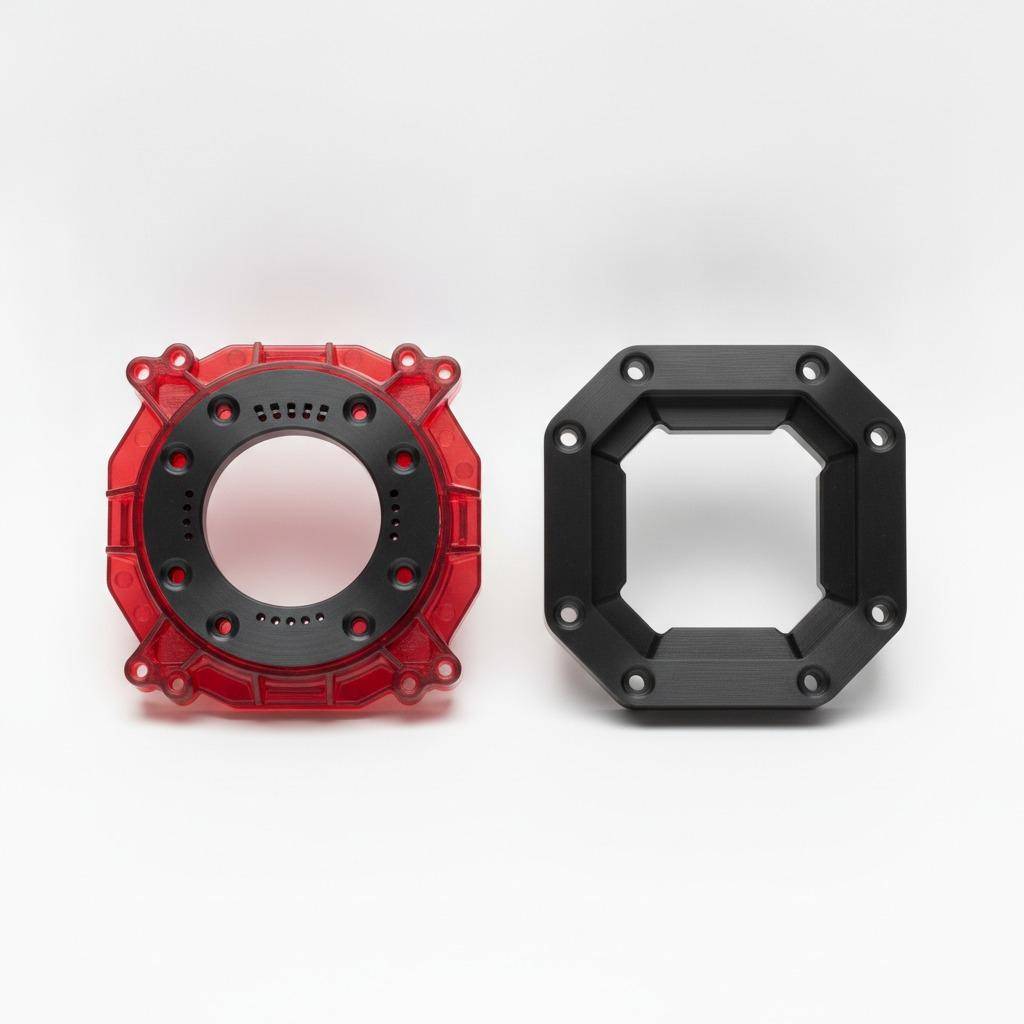
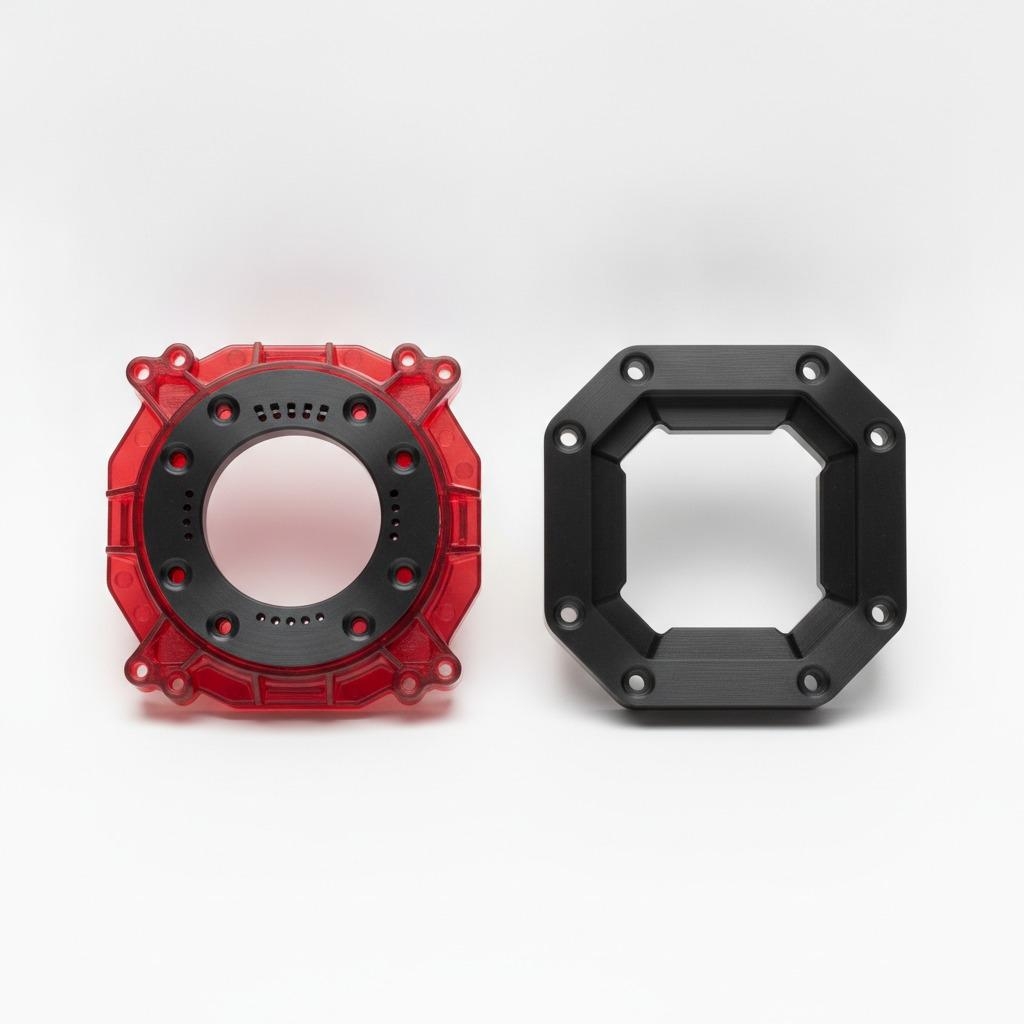
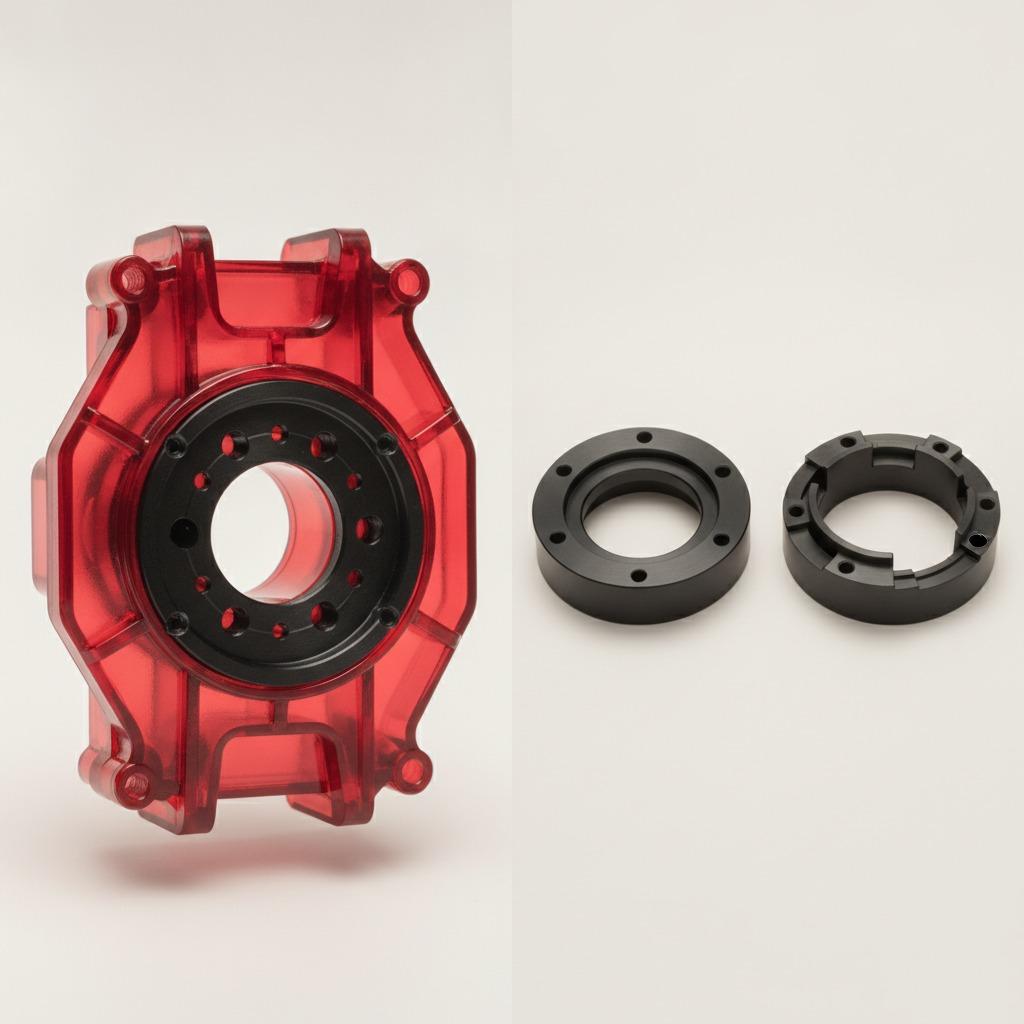
The parts shown in the preparation data indicate two common product directions: a molded housing or cover assembly with integrated openings and bosses, and CNC-machined ring or spacer-style parts with drilled holes and internal pockets. Both formats are widely used in equipment that requires dimensional consistency, alignment, and a controlled interface between components.
Product Overview
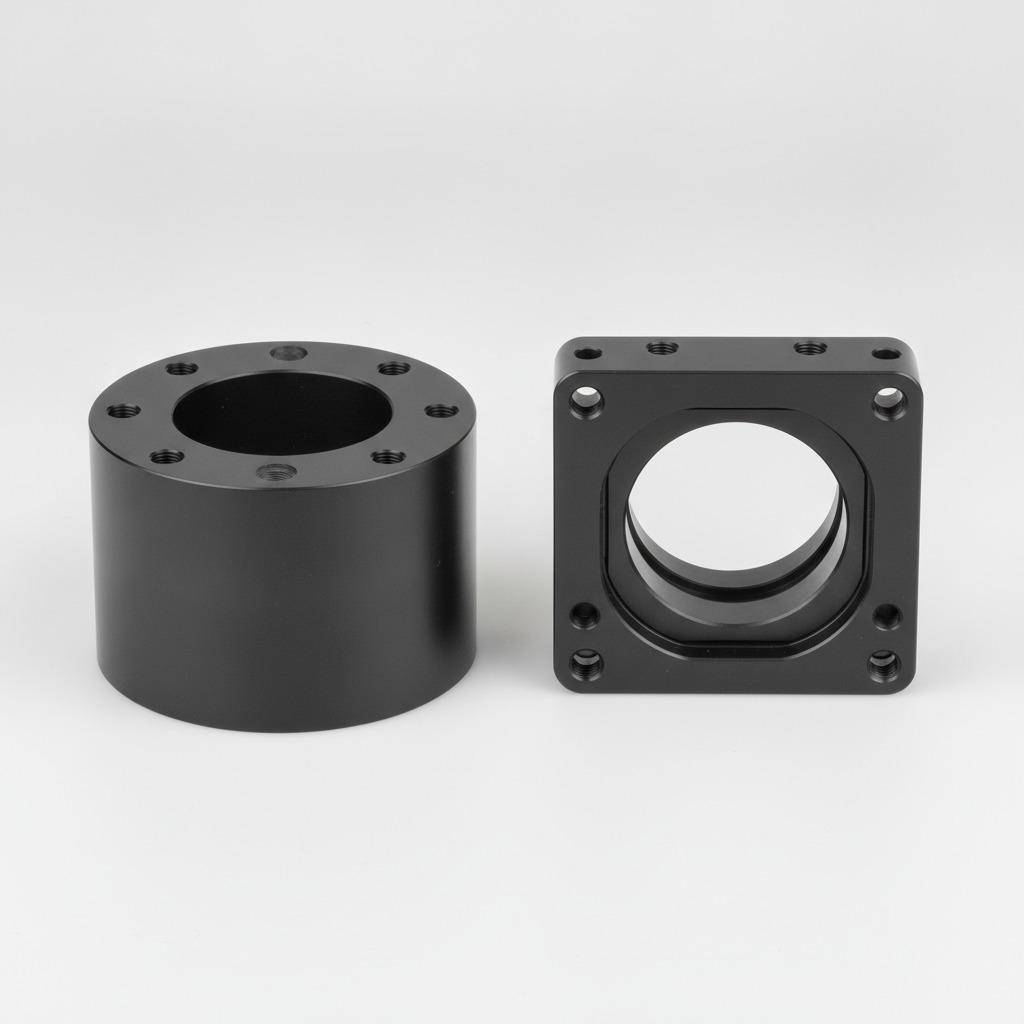
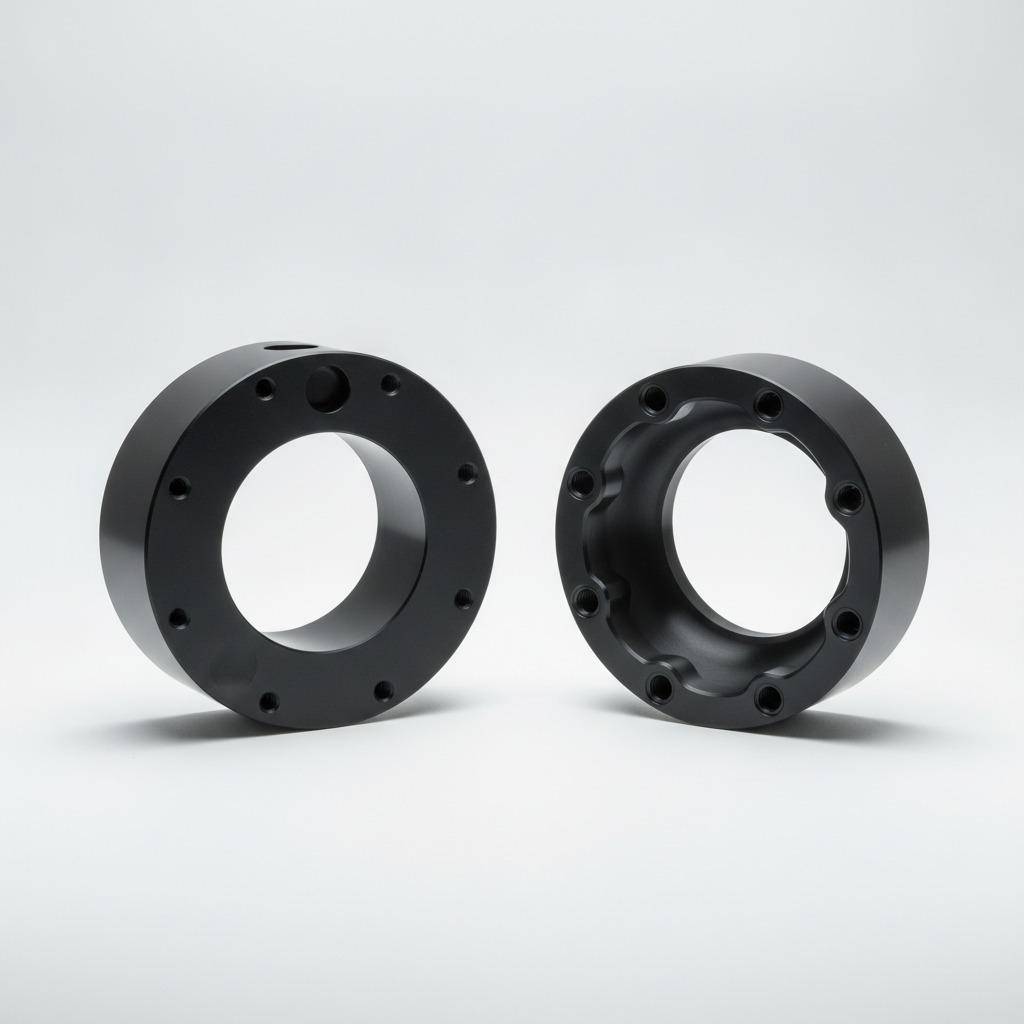
Plastic Machined Parts can serve as internal carriers, ring spacers, adapter pieces, covers, retainers, or structural interface parts. In visible examples, one style features a bright red injection-molded body with a black circular insert in the center. The other style shows dark machined ring components with a clean outer cylinder, central bore, and carefully placed holes. These features suggest products designed for mechanical mounting, positioning, and internal assembly rather than simple decorative use.
Because the image-based information does not confirm the exact end use, it is best to view these components as adaptable parts for electronics, appliances, instrumentation, robotics, and general mechanical equipment.
Key Specifications and Capabilities
Visible structural features
From the provided data, the parts include several functional design elements:
• Central circular opening or insert area
• Multiple screw posts, bosses, and standoffs
• Rectangular and oval cutouts for access, venting, or alignment
• Ring geometry with concentric bores and stepped internal lips
• Small drilled holes and recessed points for fastening or indexing
These features are often chosen when the assembly needs precise location control, stable fastening, and repeatable fit across multiple units.
Typical capability range
Plastic machined components are often selected for low- to medium-volume production, prototypes, pilot runs, and replacement parts. They can support straightforward geometry as well as more complex internal pocketing, especially when the design needs secondary drilling, boring, or trimming after molding or rough shaping.
Materials and Finish Options
The provided data does not identify the exact polymer grade, so it should not be assumed. In general, plastic machined parts may be produced from engineering plastics selected for stiffness, stability, wear behavior, electrical insulation, or chemical compatibility. Depending on the application, buyers may request opaque, colored, or natural material options.
Finish can vary from glossy molded surfaces to matte or semi-matte machined surfaces. The red housing described in the image appears to have a smooth glossy exterior, while the black ring components show a clean machined appearance with visible tool marks only on close inspection. Surface appearance should always be matched to the final function, since some parts need a neat visual finish and others need a more functional industrial finish.
Manufacturing Process
Two common production routes are represented in the preparation data. The first is injection molding for the outer housing, which is suitable when a part needs integrated ribs, bosses, and complex cavity shapes. The second is CNC machining of plastic stock or molded blanks, which is useful for accurate ring geometry, stepped bores, drilled holes, and custom internal cutouts.
A practical workflow may include blank preparation, CNC milling, drilling, boring, deburring, inspection, and assembly. For two-tone or multi-component units, a secondary assembly step may be used to combine molded shells with inserts, plates, or internal carriers. This approach gives designers more freedom to separate structural and functional areas within the same part.
Application Scenarios
Plastic Machined Parts are commonly used in assemblies where metal is unnecessary or where nonconductive, lightweight components are preferred. Typical scenarios include:
• Consumer electronics housings and internal frames
• Industrial handheld equipment covers and carriers
• Small appliance structures with access cutouts
• Instrumentation enclosures and spacer rings
• Robotics joints, fixtures, and adapter interfaces
• Replacement parts for equipment maintenance
The presence of mounting holes, concentric openings, and perimeter cutouts makes these parts especially useful in assemblies that need both access and positioning in the same component.
Quality Control Considerations
For buyers, quality control matters as much as the machining itself. A good plastic part should fit the mating assembly without forcing, rocking, or misalignment. Relevant inspection points usually include hole position, bore concentricity, fit of inserts, consistency of cutout geometry, and visual quality of edges and surfaces.
Jiangsu Yutong Drying Engineering Co., Ltd. states that products are tested before shipping and that the company operates under ISO 9001 management. While this company information is general and not tied to the specific part shown, it reflects a controlled manufacturing mindset that is important for custom components.
Customization Guidance for Buyers
When requesting Plastic Machined Parts, buyers should prepare the drawing, expected fit requirements, installation method, and functional purpose of each opening or boss. If the part will receive screws, clips, sensors, or moving interfaces, those details should be clearly marked. If a part combines molded and machined operations, it helps to identify which features are critical to appearance and which are critical to function.
Useful information to share includes material preference, color, finish, quantity, assembly sequence, and any mating parts that affect dimensions. If the black center component in the image is a functional insert, decorative plate, or mounting interface, that should also be clarified before production starts.
Buyer Decision Factors
Before ordering, buyers usually compare five points: geometry complexity, quantity, material choice, surface finish, and consistency across batches. If the application requires clean drilled holes and repeated fit, CNC machining is often the better option. If the design includes ribs, bosses, and a finished shell shape, injection molding may be more efficient. For many projects, a hybrid approach offers the best balance between cost and precision.
For custom industrial parts, it is also important to confirm whether the design must tolerate heat, chemicals, or mechanical loading. Those performance requirements were not provided here, so they should be defined by the buyer before production.
Request Custom Plastic Machined Parts
If you need custom Plastic Machined Parts for an enclosure, ring, spacer, housing, or internal carrier, the fastest path is to submit drawings, sample photos, or mating-part details. Clear input helps the manufacturer recommend the right process, structure, and finish. For projects that combine molded shells, machined inserts, and assembly features, a coordinated manufacturing plan can reduce rework and improve final fit.
For technical inquiries, prepare the part sketch, target quantity, and key functional requirements, then request a review of the best machining or molding route for your application.