
Why CNC matters on cast housings and functional bodies
When engineers look at a precision metal housing, the casting is only half the story. The other half is cnc machining, where bores, faces, bolt patterns, and datums are brought into line so the part can actually assemble and run. For a component like a pump, motor, gearbox, compressor, or hydraulic body, that final machining step is often what determines whether the part seals properly, carries load as intended, and drops into the production line without rework.
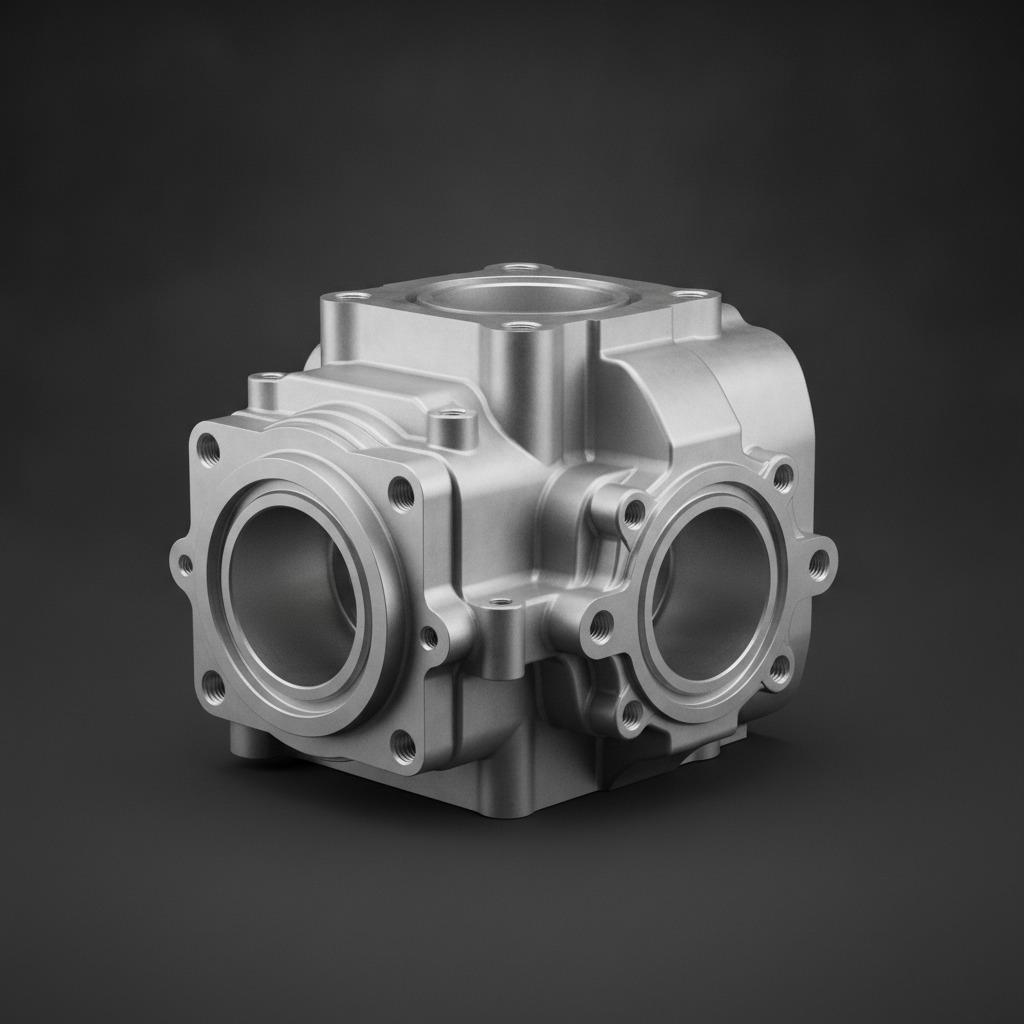
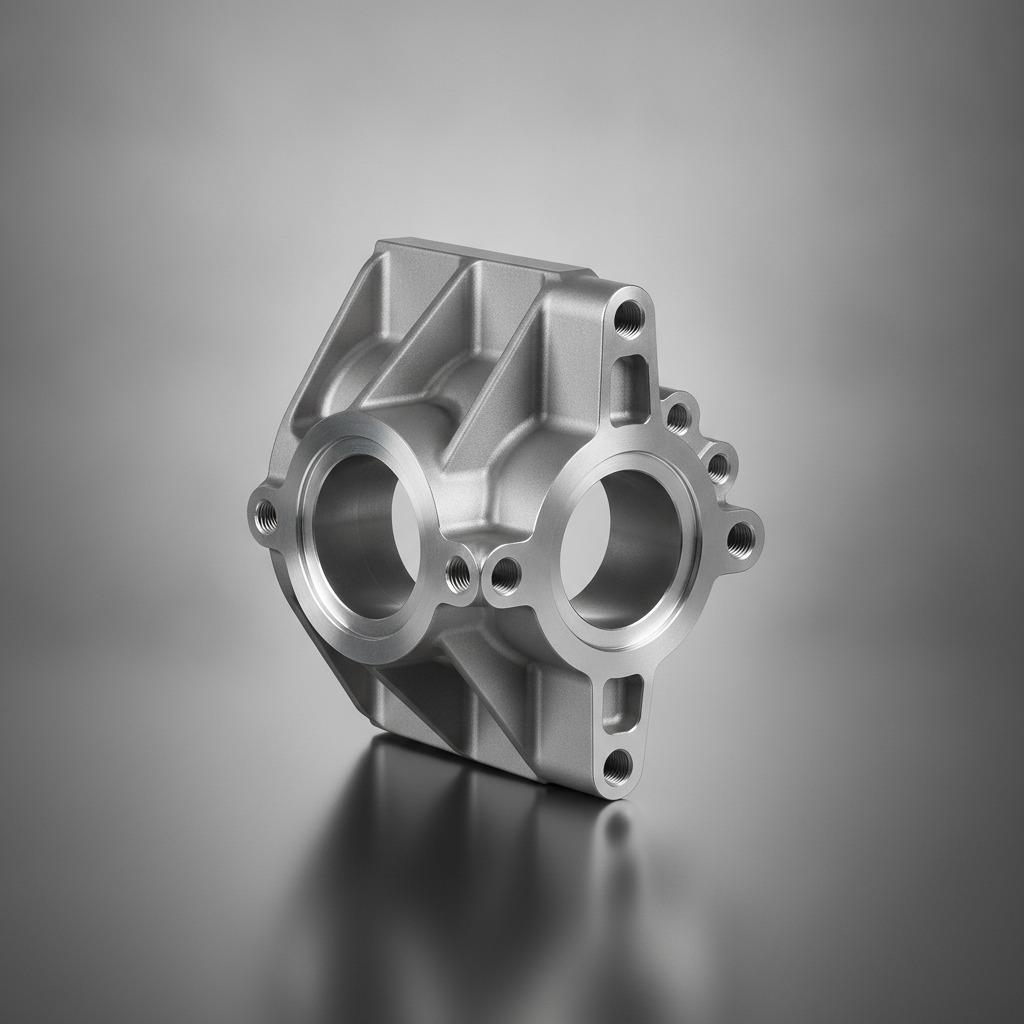
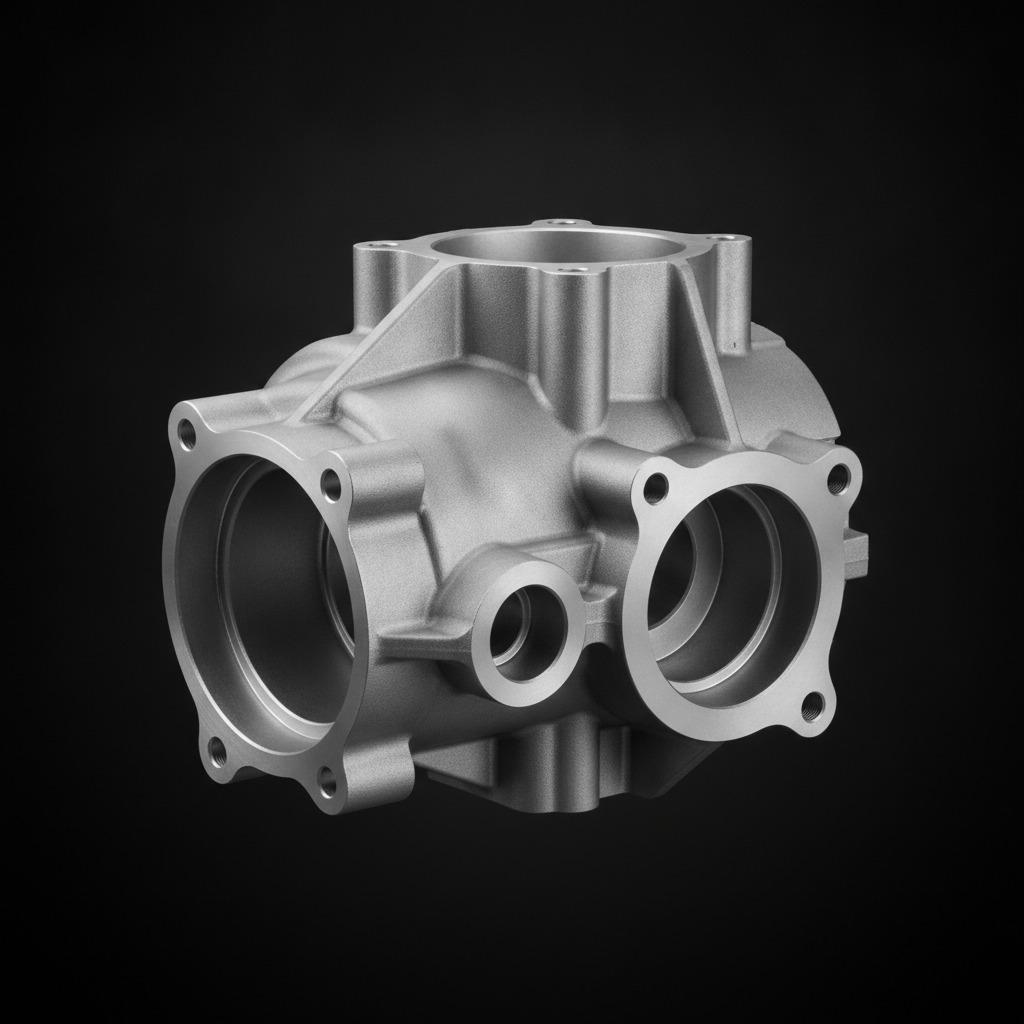
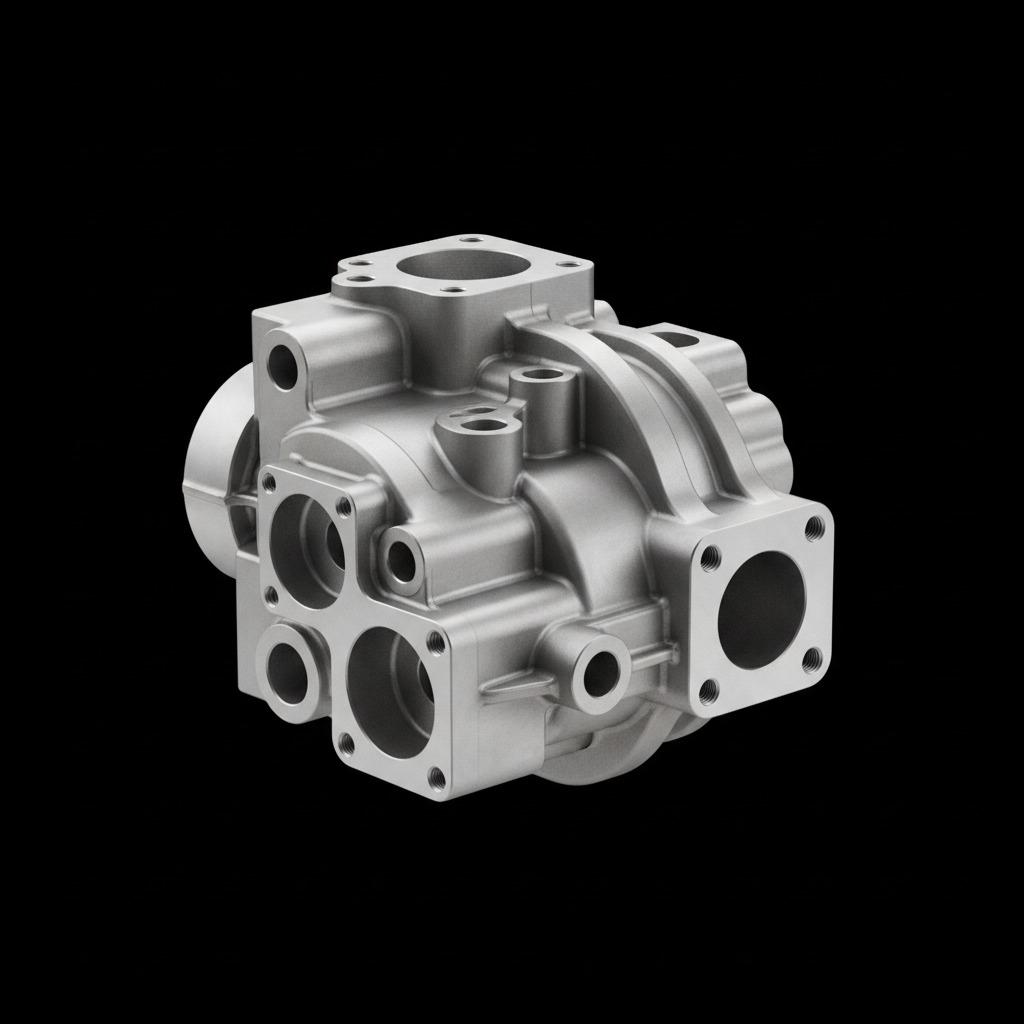
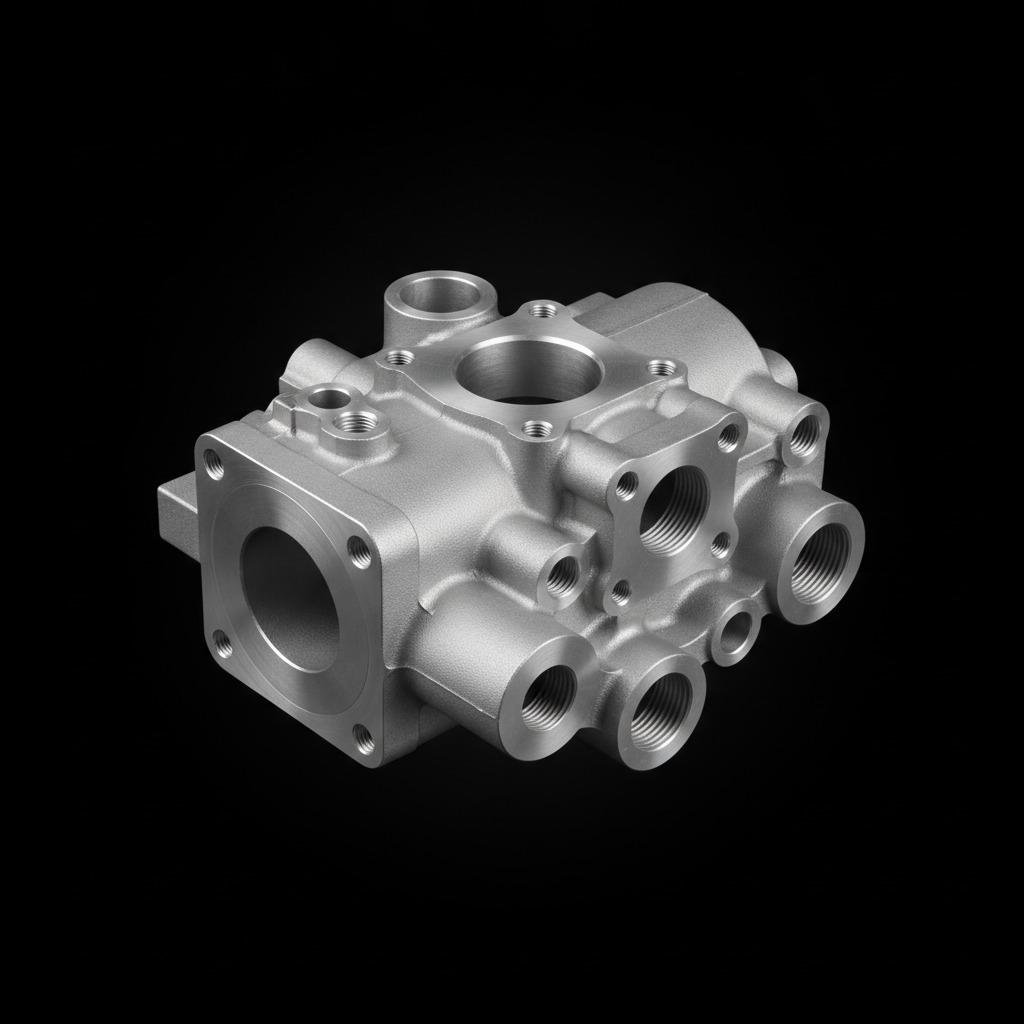
The visible part here looks like a light-colored cast metal body with multiple mounting faces, circular bores, and stiffening ribs. That combination usually points to a part designed to do several jobs at once: enclose internal mechanisms, support rotating or fluid-handling elements, and provide reliable interfaces for fasteners and mating components. It is the kind of geometry that rewards careful process planning. If the casting is inconsistent, machining time rises. If machining is poorly sequenced, the finished features can drift out of position. Buyers do not always see those costs on the drawing, but they show up later in fit-up and scrap.
What this type of part is trying to achieve
A multi-lobed industrial housing is rarely just a box. The ribs and bosses add stiffness without making the part heavier than it needs to be. The machined bores likely serve as bearing seats, shaft locations, fluid ports, or locating features. The flat faces and bolt-hole patterns indicate repeated assembly and disassembly. In practice, that means the part must hold geometry under load and remain stable after machining.
High-pressure die casting followed by machining is a common route for this kind of component because it combines near-net-shape efficiency with the accuracy of final cut features. That said, the process only works well when the casting and machining teams think together. A designer may want a compact body with several intersecting functions, but if draft, wall thickness, and tool access are not planned early, the job becomes harder than it needs to be.
Quick buyer takeaway: what to check before you approve the part
For sourcing teams, the main question is not just whether the part looks solid. It is whether the supplier can repeatedly deliver the machined interfaces that matter. Pay attention to the bore locations, face flatness, hole patterns, and how the casting supports those features. If the part will live inside rotating or pressurized equipment, even a small alignment issue can cause noise, leakage, vibration, or early wear.
Also ask how the cast surfaces are handled before machining. Excess flash, porous areas near critical walls, or inconsistent stock allowance can make the finished dimensions less predictable. That is a practical warning, not an academic one. A part may pass visual review and still be troublesome on the line.
Why cnc machining is the critical step
The raw casting provides shape, but cnc machining creates the working interfaces. On a component like this, the machine tool likely handles several tasks: facing, drilling, boring, and possibly pocketing or contouring. The value is in repeatability. Once the toolpath is validated, the same critical features can be produced across a production run with much less variation than hand finishing could ever achieve.
For engineers, the important detail is datum control. If the primary mounting face is not established correctly, every secondary bore and hole pattern can shift relative to it. On an enclosure or mechanical body, that shift affects assembly stack-up. This is one reason manufacturers often machine after casting rather than trying to force the foundry to hold every final dimension directly in the mold.
Design and sourcing criteria that matter most
Material and structure
The appearance suggests an aluminum alloy casting, though the exact alloy is not verifiable from the image alone. Aluminum die castings are common for housings because they balance stiffness, weight, and manufacturability. Ribbing and bosses are not decorative; they help the body survive clamping loads and service vibration.
Machinable features
Buyers should confirm which faces are machined, which bores are functional, and which holes are clearance-only. That distinction affects fixture design and inspection planning. A part with many mounting faces can be efficient in assembly, but it also increases the number of controlled surfaces that must be held consistently.
Inspection and consistency
Jiangsu Yutong Drying Engineering Co., Ltd., established in 2000, reports over 21 years of experience, a 16,000 square meter facility, and an annual output of around 600 machines across more than 30 types. The company also states that it uses rigorous testing before shipping and operates with an engineering team and more than 100 machines. While those details describe the company broadly rather than this exact part, they matter because complex cast-and-machined components depend on process discipline more than on appearance alone.
Common mistakes buyers still make
One common mistake is treating the casting as if it were the finished part. It is not. Another is assuming every precision bore can be machined from any direction without access constraints. That often leads to expensive setups or awkward compromises. A third mistake is over-specifying everything. Not every face needs the same tolerance discipline, and pushing tight limits across noncritical areas can raise cost without improving function.
It also helps to ask whether the supplier can consolidate multiple functions into one body. The shape shown here suggests that possibility, but it should be confirmed with engineering drawings, not guessed from the photo.
Practical questions to ask a supplier
What casting route is used for the blank? Which features are machined after casting? How is the part fixtured to control bore alignment and face relationship? What inspection methods verify the critical dimensions? If the answer to those questions is vague, the part may still be manufacturable, but it will be harder to stabilize in production.
For buyers of industrial equipment parts, that stability is often the real purchase criterion. A good-looking prototype is useful. A repeatable production part is what keeps assembly moving.
Next step
If you are evaluating a cnc-machined cast housing or a similar precision body component, start with the functional interfaces: bores, faces, and hole patterns. Then map those features back to the casting and the fixturing plan. That sequence usually reveals where the risk sits long before the order is placed.
For teams sourcing drying, mixing, granulating, evaporating, concentrating, or separating equipment parts, a supplier with engineering depth and controlled testing practices is worth a closer look. Ask for the process route, the inspection plan, and the features that are truly critical. That is the fastest way to separate a workable industrial component from one that only looks finished.